Showing posts with label Snack. Show all posts

Saturday, November 26, 2016

Masala Pav / Masala Buns


Masala Pav

Pav Bhaji is one of the most famous quick eats from Mumbai streets. You would think making fast food faster would not be possible - but trust Mumbaikars to come up with unique ideas! This take on Masala Pav is an ode to the famous Pav Bhaji with unparalleled simplicity and flavor. It is the perfect 4pm snack with a hot cup of tea!

Ingredients:
  • 4 Pav (you can use hard rolls or water rolls from the Deli)
  • 2 Tblsp butter
  • 1 Tblsp garlic paste (or 3 cloves garlic)
  • 2 fresh tomatoes
  • 1 large onion
  • 1/2 large green pepper (capsicum)
  • 2 Tsp salt
  • 1.5 Tblsp Pav Bhaji masala
  • 1.5 Tsp red chilli powder
  • 1/4 cup water
  • 1 Tbsp lemon juice
  • 1/2 cup cilantro chopped
First, chop the onions, green pepper and tomatoes fine.


Put a large saucepan or griddle (tava) on medium heat and add 1 Tblsp on butter to it. As the butter melts, rotate the saucepan slowly so that the butter covers the entire base. Add the garlic paste to this and saute it until it starts to turn brown. If you're using fresh garlic cloves, crush them fine before you add them to the butter. Using fresh garlic is always better - the paste has vinegar based preservatives which can sometimes play into the food flavor but for this recipe you're fine either way.

Add the onions to the pan and saute them well. As they start to get translucent, add the peppers and cook for 3 minutes before adding the tomatoes.


Cook the mixture for 3-5 more minutes. Now add, salt, chilli powder, the pav bhaji masala and the water to the mixture and mix well. If you have a potato masher handy, use it to mash the mixture. It should start to look like pav bhaji. :)

Add the lemon juice, mix well and move the mixture to one side of the pan. Now, add 1/4 Tblsp butter on the empty side on the pan. Slice one of buns in half (like a burger) and cook the buns in this butter on both slides.


For the assembly, add the mixture on both sides of the bun, adding some cilantro on the bottom half. Add the top part back on, smear more mixture on the outer side as well, garnishing with cilantro. Enjoy!

Sunday, August 7, 2016

Chinese Bhel

Chinese Bhel
"Bhel" is the quintessential snack from Mumbai, perhaps second only to Samosas in terms of global fame. Chinese Bhel is something born on the streets on Mumbai; It is a perfect marriage of Indian and Chinese cuisine with fried crispy noodles substituting puffed rice in the Bhel with some other variations thrown in.

This is a simple recipe to follow and I am certain it is a snack you'll want to make over and over! Here is what you will need (ingredients to serve 2-3)

  • 1 slab of raw vegetarian hakka noodles (100-150 grams)
  • Oil to fry
  • 2 cloves Garlic
  • 1/2 Green Bell Pepper thinly sliced
  • 1/2 Red Bell Pepper thinly sliced
  • 1/2 cup Cabbage shredded
  • 1/2 cup Carrots shredded
  • 2.5 Tblsp Tomato ketchup
  • 1.5 Tblsp red Chilli sauce (or Sriracha sauce)
  • 1.5 Tblsp Vinegar
  • 1.5 Tblsp Soy sauce
  • 0.5 Tsp Salt
  • 3-4 springs of Spring Onion
For the noodles, you can use any store bought noodles pack that you would use for lo-mein. Soak the noodles in cold water for 30 to 45 minutes. Noodles will be one slab at first and that is fine - they will be easier to maneuver after the soak.  In the meantime, slice the vegetables as shown below.


You can prepare the sauce as well - in a bowl, add the tomato ketchup, chilli sauce, vinegar and soy sauce together and mix well. That's it - keep this aside.

At this time, you can begin frying the noodles. Drain all the water from the noodles and work with your fingers to untangle them as much as possible. I have found that this helps the frying process. Even though the noodles are wet, you should not have to worry about oil splatters. Drop the noodles into oil at med-high heat and fry for a good 3-4 minutes. If you take them out any earlier, the noddles come out soggy.This can be a little tricky since the noodles won't brown either. Test this out with a small batch first until you have a hang of it.


In a pan, heat 2 Tblsp of oil. Add crushed garlic and fry for 30 seconds. Add the vegetables and fry for 2-3 minutes on medium-high heat. You will want the vegetables to get cooked but not too soggy. If you feel the vegetables are burning due to lack of oil, cover the pan and let the vegetables cook for 30 seconds.


Once the vegetables are cooked, add the sauce and mix well. Add the salt - go  easy on the salt since the sauce has a high salt context already. Add some spring onion (keep some for garnishing) and finally, add the crisp noodles. Toss the mixture well and garnish with green onions.

That's it - Enjoy!

Friday, June 26, 2015

Guacamole

Guacamole

I have really gotten addicted to Guacamole over the last few months: It is my go to appetizer in Mexican food. Guacamole is a traditional Mexican dip with tortilla chips. Here is a simple recipe that is sure to be a hit at any party, pot luck or an evening at home.

  • 3 avocados
  • 1 Roma tomato
  • 1 medium red onion
  • 1/2 cup cilantro
  • 1 lime
  • 1 Serrano pepper
  • 1/2 Tsp red pepper
  • 1 Tsp ground roaster cumin powder
  • 1 Tsp Salt

If have not picked avocados at the market before, here are 2 broad thumb rules to follow. Visually they should be brown but with a hint of green. Second, they should feel firm but not too firm.

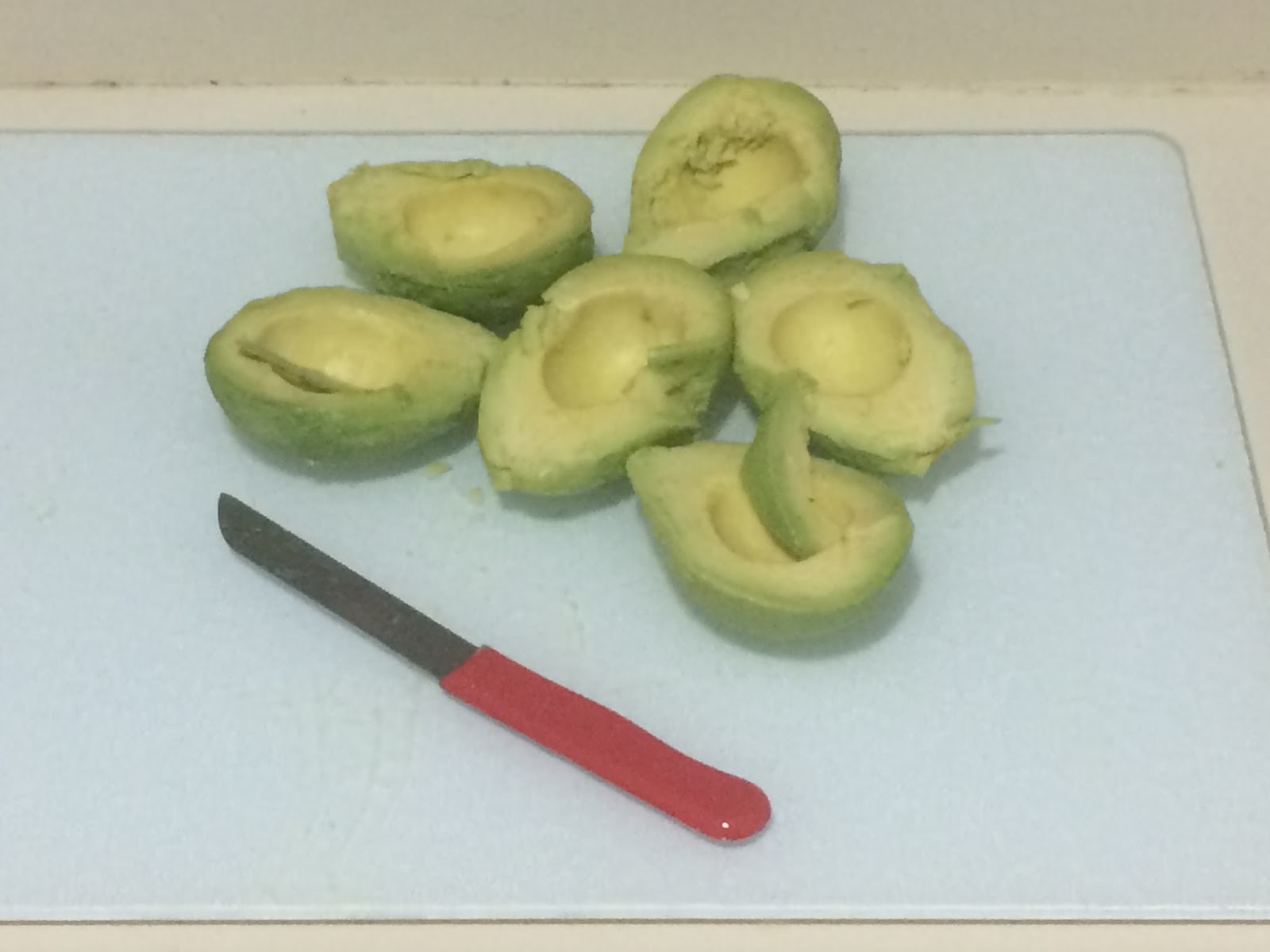
First off, cut, peel and half the avocados as shown below. Avocados are very easy to peel - you first halve them - the seed remains in one of the halves.You should be able to peel the skin off with your fingers and be able to pop the seed out with a spoon or a knife.


Next, we need to mash the avocados. How and how much you mash depends on the overall consistency you desire. This is very much like salsa - some like it chunky, some don't. I prefer medium,so I usually use the blender to give it a quick whirl and get the desired consistency. Usually you should be able to use a potato masher or even a spoon to get the job done. This is a before and after of my avocados:


Transfer the mashed avocados to a bowl. Now add the finely chopped onion and tomato into the bowl as well. I usually leave the juicy seeds of the tomato out of the recipe but you can throw that in as well.Now slice the Serrano pepper, remove the seeds, mince it and add to the bowl as well. 

Chop the cilantro and ad it along with the salt and spices. Finally, add the juice of the lime to the mixture. You should a very colorful mix in the bowl :)


Mix well and refrigerate for about 20 minutes before serving with tortilla chips.
¡Buen provecho!

Saturday, March 1, 2014

Vegetable Cutlet

Vegetable Cutlets
Vegetable cutlets are a classic and quintessential snack that you can find all over India. Anushka and I have nostalgia of vegetable cutlets served in long distance trains early morning! Since I made the green chutney a few days ago, I thought taking a shot at these would a good idea. Its really simple and this makes for a super tea time snack.

This is what you will need:

  • 3 medium potatoes
  • 1 medium sized carrot
  • 5-6 strings of green beans
  • 1 Tblsp sweet corn kernels
  • 1 Tblsp peas
  • 2 Tblsp coriander leaves chopped fine
  • 2 green chillies chopped fine
  • 1 Tsp freshly grated ginger
  • 2 Tsp salt
  • 1 Tsp red chilli powder
  • 1 Tsp coriander powder
  • 1 Tsp garam masala
  • 1 Tsp dried mango powder (aamchoor)
  • 1 Cup all purpose flour (maida)
  • 3 slices of bread
  • Oil for frying
The first thing to understand is that unlike tikkis, potatoes are not the star of this dish, the vegetables are. 3 potatoes may seem less but all they're doing is being a binding agent to the cutlet, so that's all you should need. Boil these potatoes, let them cool down and then peel and mash them.

Next, wash and chop the carrots and beans into fine bits and then steam them with the peas and corn. If you haven't steamed vegetables before, here is how to do it: Fill a deep vessel such as a pressure cooker with about 2-3 inches of water and put it on the stove to boil. Take a a metal strainer or a heat resistant colander with the vegetables in it and place it on top of the vessel, so that the vegetables are not touching the water. Cover the vessel with a lid in a manner so that only some steam is allowed to escape.. I'd say you want to let this steam for about 10 minutes. A good test is picking off a piece of carrot an biting through it. You don't want it too raw, neither do you want it mushy.

Once the vegetables are steamed, put them on a dry cloth napkin and squeeze the water from them. Don't worry about mincing peas or corn but don't be too hard on the squeeze. If required pat this mixture with a paper napkin.

Next, take the mashed potatoes in a wide prep bowl and add the vegetables, coriander, green chilies, ginger and spices.


Time to get he hands dirty: mix all of these well and create a ball of the overall mixture. Now oil your hands well and take about 2 Tblsp of the mixture and roll it into a small ball and then flatten it. The oil makes this process easier and the cutlets are less likely to break. You should be able to prepare about 10 cutlets - keep them aside.


At this point the major prep work is done. Now we have to work on the outer coating - the batter that is. First off, continually add water to the flour until you achieve a nice thick consistency. If this is too flid, then the batter will just slip off the cutlet before the flying begins. Substituting maida by rice flour  is an interesting touch here - the rice flour makes the exterior more crisp. Second, take the 3 slices of bread, tear them into 3-4 chunks and thrown them into the grinder to get fine breadcrumbs. We're ready.


Heat the oil - you want the oil to be on high heat else the cutlets will begin to crumble as soon as you dip them in the oil. Here is how you want to proceed - dip the cutlet in the batter, then quickly lather it with the breadcrumbs. This is how it should look before being thrown into the oil.


That's it, fry these until golden brown and serve the cutlets hot with chutney or sauce and piping hot tea.


Sunday, March 4, 2012

Chandrapuri Vada

Chandrapuri Vada
This recipe actually actually appeared in the newspaper last week as part of an article on Nagpur Cuisine. Nagpur is a city in Maharashtra, and this dish seems to be a typical Vahradi (Vidharbha) dish. The article mentioned that these vadas are usually eaten with rice, but I find that a little odd and I suggest treating them as tea time snacks.

Ingredients:
  • 1 Cup whole Moong dal
  • 1/2 Cup Channa dal
  • 1/4 Cup Toor dal
  • 1/4 Cup kaali dal
  • 1/4 Cup matki
  • 1/4 Cup chawli / rongi
  • 3 Tsp Salt
  • 1 Tsp turmeric powder
  • 1.5 Tsp red chilli powder
  • 1 Tsp cumin powder
  • 1 Tsp Coriander powder
  • 1 Tblsp minced ginger
  • 4 green chillies chopped fine
  • Some fresh coriander leaves
  • Some fresh curry leaves
  •  Oil to fry
First, if you don't know your dal / lentils well, Google the ingredients so you have the right ones. Once you're ready, add all the lentils in a bowl and wash them 4-5 times in cool water. Soak these lentils for at least 6 hours. This is how they should look after that:


Now, we need to grind these lentils. The idea is to grind them coarsely and if you're new to the mixer-grinder operations (as I was) - this may be a little tricky: How coarse? How much time to grind? How much water to add? What I recommend  as a thumb rule is grinding 1.5 cups of lentils as a time - its more manageable. You will roughly need to add 1/4 cup of water to this while grinding. Also, do not go overboard with keeping the lentils coarse - just don't get it to a paste - anything less is good.

Once the lentils are ground, add the salt, turmeric, chilli powder, cumin and coriander powder and mix well. Now, add the ginger, green chillies, coriander and curry leaves. Now add 2 teaspoons of very hot oil to this mixture and stir well. That's it - heat the oil for frying and you're all set for frying these vadas.

I made small balls for frying, although the tradition method is small rounds with a hole in the center. That is too difficult for me! If you find that your dough just spreads in the oil as soon as you put it to fry, try adding a couple of handfuls of gram flour.

Serce with chutney or hot ketchup.

Sunday, August 29, 2010

Vegetable Vermicelli

Vegetable Vermicelli for Breakfast
Here is another quick way of whipping up a tasty vermicelli dish for breakfast or tea. Its really simple, requires minimal ingredients and time.

Ingredients:
  • 1/2 Cup vermicelli or Bambino noodles
  • 1 Cup water
  • 1/2 Cup of mixed vegetables (Carrots, peas, corn, beans - avoid onions here)
  • 1/2 Tsp salt
  • 1/2 Tsp red chilli pepper
  • 1 Tsp mustard seeds
  • 4-5 Curry leaves
  • 1 Tblsp Oil
Heat the oil on medium heat and add the mustard seeds to it. As the seeds begin to splutter, throw in the curry leaves and fry for about 30 seconds. Now add the vermicelli to the pan, and mix well. Fry this for about a minute or until the vermicelli turns golden brown.


Add the veggies, water and spices to the mix and stir well. Cover and cook on low-medium heat for about 5 minutes. That's it - its ready to eat!

    Sunday, August 22, 2010

    Vermicelli Upma


    Saturday breakfast yesterday was vermicelli upma, south Indian style. Turned out fairly decent :)

    Ingredients:
    • 2 Cups vermicelli / bambino  (Indian store)
    • 3 Cups water
    • 1 small onion cut into thin long slits
    • 2 Green chillies chopped fine
    • 1 Tblsp Mustard seeds
    • 1 Tblsp Chana daal
    • 1 Tblsp Urad daal
    • 2 Tblsp cashew pieces
    • 7-8 Curry leaves
    • 2 Tblsp Oil
    • 2 Tsp salt
    I usually buy pre-roasted bambino from the Indian store - this is already golden brown when you buy it. If that isn't available, roast the 2 cups of bambino in a tblsp of oil for a couple of minutes on medium high heat until it turns a nice brown color. Remove and keep aside.

    To formally begin, heat the oil in an open saucepan and add the mustard seeds to it. Once the seeds start to sputter, bring the heat down to medium and add the curry leaves, cashew pieces and the lentils. Fry these for a bit until the cashews and the lentils begin to turn golden. Now, add the chillies and the onions to the pan and saute for a few more minutes until the onions turn translucent or light brown.

    Initial ingredients being sauteed

    Once that happens, add the water and salt to the pan and bring the mixture to a boil. You can taste the water at this time to see if the salt is appropriate. As the water begins to boil, ad the vermicelli and mix all the ingredients in the pan well.

    Nearly done
    Bring the heat down to medium low, cover the pan and wait for about 10 minutes. Once the water has evaporated, the upma is ready to be served. Best served with a piping hot cup of tea!

    Saturday, August 16, 2008

    Cabbge Pakoras (fritters)


    This weekend I was in the mood for something savory, something spicy...
    All you get in the US is warm donuts, large cookies and huge muffins. The best bet for a savory snack are chips or perhaps onion rings or fries, but in the end, they're not just what I was looking for.

    On a cloudy day, the best companion to a hot cup of masala tea is plate of hot pakoras!
    I have had pakoras made from aaloo (potato), pyaaz (onion), gobi (cauliflower), paneer (cottage cheese), but a colleague (Thanks, Vijaya) recently introduced me to a new kind: pakoras made from cabbage.

    If you've never had these before, you're probably making the same face I made, and already shrinking away. I suggest you decide you hang on, and give these a shot, they're surprisingly gooood!

    Spicy:

    Ingredients:
    • 1/2 cabbage shredded fine (medium size cabbage)
    • 1/2 Cup besan (lentil flour)
    • 3 tsp salt
    • 1.5 tsp red pepper
    • 1 tsp cumin seeds
    • 1 tsp coriander powder
    • 1 cup fresh coriander leaves
    • 1 cup water
    • Refined Oil for frying
    Put the finely shredded cabbage into a large bowl. Add all spices and mix well by hand. Now add the maida / flour and the coriander leaves over this mixture, and work thru the mixture with you hands. Add water bit by bit, start off with a very small quantity: about 2 table spoons, and continue mixing well with hands. It is important that there isn't too much water, else frying the fritters can pose issues later. Your mixture should look something like this:


    Now heat the oil in a wok / kadai on medium high. This should be ready for frying in about 5-7 minutes.

    Using a tablespoon, scoop out a spoonful of this mixture and gently let it into the oil. Repeat twice, if the wok is large enough.


    Once the color of the pakora starts to change, flip to the other side. Take them out once they are golden brown or to the desired crispness. Place on a bunch of tissue sheets, so that the excess oil is absorbed.

    Serve hot or cold with ketchup or chutney.

    Tuesday, August 12, 2008

    Samosas


    I was in a cooking mood this weekend. I'd found a great cook book at the library the week before, and I thought of making Samosas a shot... yeah, Samosas!!

    I think they turned out pretty well...


    Spicy:


    Ingredients:

    For the dough:

    • 2 cups all purpose flour
    • 1.5 tsp cumin seeds
    • 1/4 tsp ground anise
    • A pinch of salt
    • 1/2 cup vegetable shortening
    • 1/3 to 1/2 cup cold water
    • 2 cups vegetable shortening to fry the samosas
    Filling for samosas:
    • 6 Medium potatoes, boiled and cut into small pieces or broken into coarse chunks
    • 1 Large onion, very finely chopped
    • 1 tsp ginger-garlic paste (use a bit of each if paste is unavailable)
    • 1 cup peas (if frozen, wash them with warm water and ensure that they are soft)
    • 1 tsp red pepper
    • 2 tblsp coriander powder
    • 1 tsp cumin powder
    • 2 cups chopped coriander / cilantro
    • 1 tblsp salt
    Take a large plastic bowl (like a popcorn bowl) to make the dough. Mix the flour, anise, cumin and salt. Add the shortening, and rub into the flour mixture until little granules are formed. Add the water, a little at a time, until a stiff dough is made. I think it should take somewhere from 1/3 to half a cup. Knead well for a few minutes, and then refrigerate for an hour. While you wait, you can work on the filling. This is really very simple. Simply mix all the ingredients together in a large bowl, so that they stick together like a dough. Make sure that the filling is absolutely dry. This very important: if the filling is not dry, the liquid can make it very hard to deal the samosa.

    Now to actually make the samosas...
    Divide the ball of dough into 10 pieces of approximately the same size. Take one of these pieces and roll them into a small ball, as you would for making a chapati. Now flatten the ball. Using a rolling pin, roll out a flat round shape of about 7" diameter. The thickness should be as thin as possible, but don't go overboard with it, else wrapping the samosa becomes a problem.

    Using a pizza cutter, cut the rolled out circle in the middle, to cut the shape into two equal halves. Each half shall create one samosa. Take a tblsp full of the mixture and place it in the middle of one of the halves as shown in the picture below.

    Before you proceed, take a cup of water. dip you index finger, and run it around the edges of the entire shape, to dampen the edges. Now, take the right most edge, lift it, and bring the dough layer towards the left such that it covers the filling on the right. Repeat the procedure for the left hand side, and ensure that the top portion is nearly or completely sealed.

    Moisten the base of the triangle; fold up at the edge and the top. Press down well with a fork or your fingers to completely seal it. This is imperative so that the shortening does not seep in during the frying, and the filing does not spill out.

    Repeat this procedure, and you should have around 20 samosas ready for frying.

    Frying:

    Heat the two cups of vegetable shortening in a wok / kadai.
    I am sure the shortening could easily be substituted with refined oil, but the shortening is healthier, and gives the samosa a lighter feel & taste. Matter of personal preference.

    Reduce to medium high heat.

    When the shortening has been on medium high for about 5 minutes, drop a pinch a dough in it. If the dough rises at once, the shortening is ready.

    Now deep fry the samosas, frying on one side until it is golden brown, and then turning it over. When done, place the samosas onto a stack of 3-4 paper towels. This helps soak the excess oil.


    Serve samosas hot or hot with ketchup or chutney.
    Hope you enjoy them!!!


    Sunday, October 7, 2007

    Breaded Potato cutlet


    Ingredients:
    • 4 medium size boiled red potatoes
    • 1 teaspoon jeera
    • 1 teaspoon ajwain
    • 2 teaspoons salt
    • 3/4 teaspoon red chilli powder
    • 1/2 teaspoon turmeric powder
    • 2 tablespoon oil
    • Some slices of bread
    • Oil for deep frying
    Start off with heating the oil in a kadai (small wok). Add jeera and ajwain to it. Cut the potatoes into small cubes, while the jeera & ajwain start to crackle. Add the potatoes to the kadai, and sprinkle the salt, red chilli and turmeric powder over the mixture. Mix well. its fine if the potatoes get a bit mashed up. Keep this mixture aside. Start heating the oil for deep frying. Meanwhile, take a slice of bread, and lightly dip in water. Immediately squeeze the slice between your palms to make sure the water is out. The bread slice shall get soggy the first couple of times you try it, so perhaps you are better off just applying the water lightly to the slice. If the bread is too dry however, the cutlet ends up tasting like breadcrumbs! Take a tablespoon of the potato mix and place it in the middle of the bread slice. Pull the corners of the bread slice together to enclose the potato mix in the breading. Give it any shape you want. Repeat and form many such cutlets.


    When the oil is hot enough to fry, dip in a cutlet carefully into the oil and fry till your desired crispness is achieved.


    Serve with tomato ketchup or coriander chutney.

    Tip: Cutting off the edges from the bread gives you a better presentation in the end, but if you keep them, shaping the cutlets is easier.

    Sunday, April 29, 2007

    Vada Pav


    OK, so I took a big leap in cooking: I made Vada pav today!!! Vada Pav is to Mumbai, what Pizza is to Italy. Naturally, the Pav is not available here, so I got the makeshift Hamburger buns instead. Here are how the vada's turned out ...


    It turned out really well, and undoubtedly it has been my best effort yet - first time right :)


    Spicy:

    Ingredients:
    • 2 boiled potatoes
    • 1/4 cup Gram flour (besan)
    • 1 teaspoon salt
    • 1/4 teaspoon turmeric powder (haldi)
    • 1/2 teaspoon garlic paste
    • 1/4 teaspoon ginger paste
    • 2 green chillies
    • 1/2 teaspoon mustard seeds
    • 4 - 5 curry leaves
    • Frying oil
    • Pinch of baking soda
    • Hamburger buns (Pav substitute)
    Take gram flour in a bowl and add some water to it. Start with 1/2 cup of water and stir. Add water in small measures, and continue to stir, until the batter is just right. It should not be towards the dripping side, neither should it resemble a paste. Remember: this shall serve as the frying batter. Add two pinches of salt, and a pinch of baking soda to the batter. Keep the batter aside.

    Mash the potatoes.
    Grind the green chillies to a paste, and mix it with the garlic and ginger paste. (I already had green chilli paste, so I just mixed all the three pastes in a spoon) Add this paste and 1 teaspoon salt to the potatoes, and mix these ingredients. This step needs to be thorough, because you run a chance of having parts with too much garlic or ginger.
    Now, in an open flat pan, heat 2 table spoons of oil on medium flame. I use corn oil for frying, and all cooking purposes, I think it tastes better than vegetable / canola oil. Add mustard seeds and curry leaves in the pan. When the mustard leaves begin to splutter, add the turmeric powder, and mix well. Wait half a minute, and take the pan off the heat. Add the mashed potatoes to the pan, and mix everything well. Put the mixture in a bowl, and mix it again using your hands.


    If you ever attended a true Bombay school, you should smell the vadas already!

    Heat some oil in a deep bottom pan. Ensure you have enough oil for deep frying. Heat the Oil on medium-high.

    Make small balls from this potato mixture, dip them in the gram flour batter and add them to the oil, after ensuring that the oil is hot enough. To ensure that the oil is hot enough, add a drop or two of the batter to the oil. It should immediately rise up, frying.


    Keep turning the vada around at regular intervals, making sure all sides are being fried.
    Fry until the vada becomes golden brown. Take the vada out, and lay them on a newspaper or paper napkins to absorb the oil. That's it, your vadas are ready!!!!
    If you do not access to pav, use hamburger buns.